
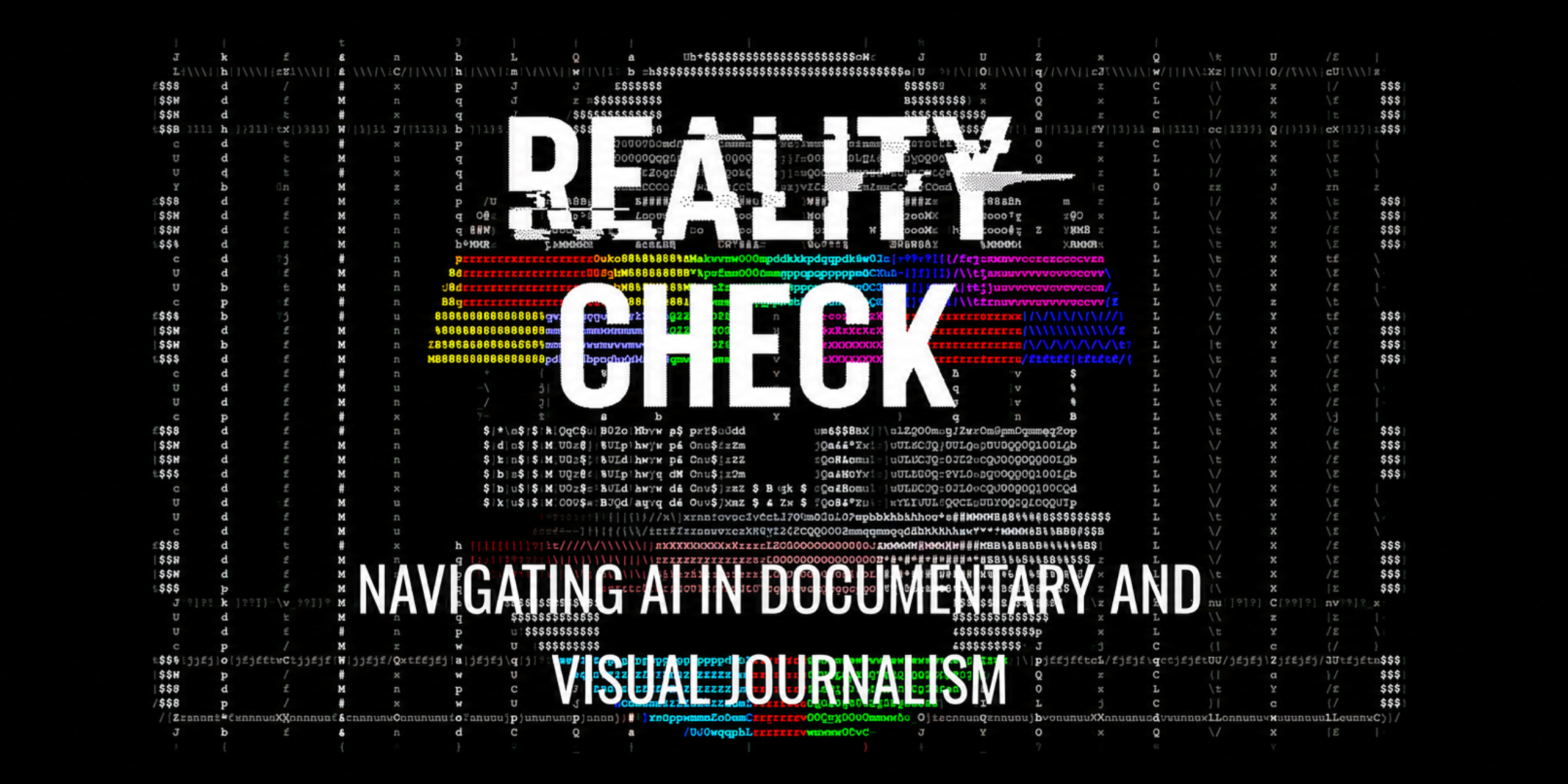
WITNESS and partners launch Reality Check Initiative to Address the Impact of AI on Documentary
WITNESS and a group of leading organizations from the documentary and visual journalism fields have co-created Reality Check, a cross-disciplinary initiative bringing together leaders from technology, archival preservation, research, human rights, and policy to address the growing impact of artificial intelligence on nonfiction media.
As generative AI becomes more common in media production and everyday life, it is changing how documentaries are made, shared, and understood. It raises important questions about what we can trust, how creative work is valued, and how AI is shaping public understanding of the world.
The initiative was developed in partnership with the Co-Creation Studio at MIT, the Archival Producers Alliance (APA), and the International Documentary Association (IDA). Together, the partners aim to strengthen collaboration, research, knowledge sharing, and collective action to help documentary and visual journalism communities navigate the challenges posed by AI.
For WITNESS, the challenges go beyond synthetic media. AI-generated images and videos can be used to spread misleading information, while authentic footage can also be dismissed as AI-generated, making it harder to document human rights abuses and hold those responsible accountable. These challenges affect not only how we understand images, but also how we document events and preserve evidence.
“Documentaries hold power accountable, build public trust, synthesize historic narratives, and provide testimony that cannot be replicated by text alone,” says shirin anlen, Senior Manager of Field Intelligence, Response and Evaluation at WITNESS. “These essential cultural and civic practices face an existential threat from AI.”
The Reality Check Framework
The Reality Check Framework looks at how AI is changing documentary work in three main areas. It looks at what audiences see on screen, including AI-generated images and videos. It also explores the AI tools increasingly built into the equipment, software, and platforms used by filmmakers. Finally, it considers how AI affects the people, communities, and stories documentarians work with.
These changes can make it harder to trust images as evidence, introduce AI tools into filmmaking without clear information or meaningful user control, and raise concerns about the value of human creative work.
One example of these challenges is explored in a recent column published by Documentary Magazine. It examines how AI tools for organizing and searching footage can influence which moments filmmakers notice and which they overlook. By favoring recognizable patterns, these tools risk sidelining the ambiguity, subtle interactions, and unexpected connections central to documentary storytelling. The column calls for filmmakers to help shape the tools that increasingly shape their work.
Reality Check also supports the AI + Documentary Working Group, which now brings together more than 500 members across the nonfiction field. Launched in 2024, the group meets monthly for presentations, community case studies, and collaborative discussions. Filmmakers, visual journalists, technologists, archivists, human rights advocates, researchers, and policy actors are invited to participate.
The Reality Check website brings together research and practical resources to help protect documentary and visual journalism, support nonfiction media communities, and defend the public trust on which healthy democracies depend.
Explore Reality Check and join the AI + Documentary Working Group.