
WITNESS Backs Indigenous Youth in Brazil to Document and Defend Their Territories Through Visual Investigations
Brazil is the fourth deadliest country in the world for environmental defenders, according to Global Witness’s most recent report. Despite these threats, Indigenous communities across the country continue to fight for their rights, increasingly up against coordinated disinformation campaigns designed to discredit the realities they face. In this environment, visual evidence has become an essential tool of resistance.
In 2026, WITNESS supported 30 young Indigenous people in Brazil through REVIDE (Video School for the Defense of Territories), a training program in audiovisual and digital technologies for Indigenous communities in the North and Northeast of the country. REVIDE means “to fight back” in Portuguese, and that is precisely our focus: equipping Indigenous communities with the tools they need to effectively defend their territories. The program supports communities in documenting environmental and human rights violations and using audiovisual evidence for advocacy, accountability, climate justice and reparation.
REVIDE participants documented threats including illegal soy and cattle production, logging, illegal mining that contaminates rivers, and violence and persecution against those defending their lands. On territories that have not yet been demarcated, participants also documented occupation by large agribusiness companies, including transnational corporations such as Cargill, affecting artisanal fishing and communities’ ability to move freely along rivers.
The urgency is clear. According to the Brazilian Institute of Geography and Statistics (IBGE), Brazil’s Indigenous population is more than 1.5 million, and many communities continue to fight for the demarcation of their territories, the official process through which Indigenous lands are recognized and protected. The report Violence Against Indigenous Peoples in Brazil, published this year by the Indigenist Missionary Council (CIMI), reveals a critical situation, with 1,276 cases of violence, including mining and logging invasions, illegal exploitation and direct conflicts.
Using Visual Investigations to Document Violations
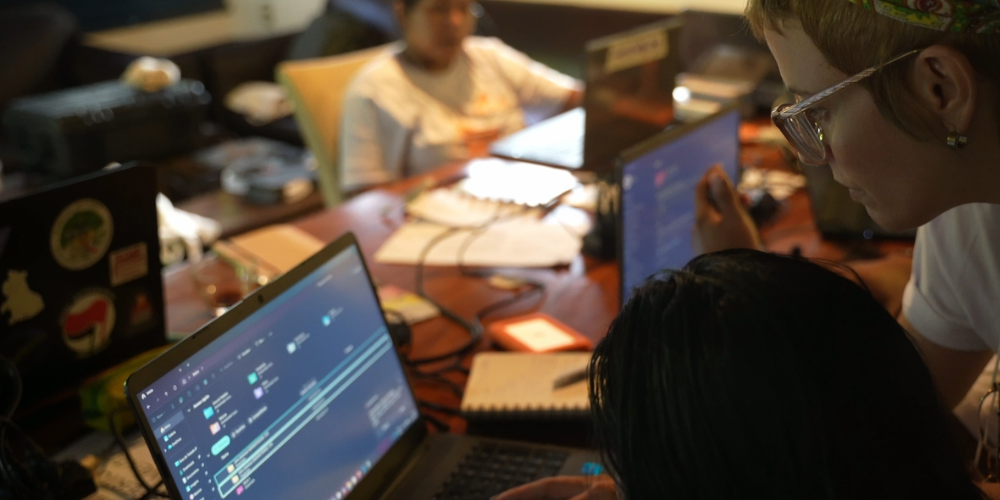
The training was grounded in WITNESS’ methodology for community-based audiovisual documentation and preservation. It included two modules: an online module that helped participants identify violations, define demands for justice and organize existing visual documentation; and an eight-day, in-person laboratory with six participants focused on building video investigations using their own archives alongside open-source information, including satellite imagery, reports and databases on deforestation, fires and mining.
The result was a combination of community knowledge, audiovisual documentation and open-source research. Participants used existing and newly recorded footage, corroborated with satellite imagery and other sources, to document violations and better understand their impacts.
Tools such as Google Maps and Google Earth Pro also helped participants identify illegal land use and track changes over time without exposing themselves while documenting violations on the ground.
Why Community-led Documentation Matters
At the heart of REVIDE is a community-led approach: communities decide what needs to be documented, how they want to be represented, and what can safely be shared. They hold critical knowledge about their territories and the conflicts affecting them. Rather than imposing an external narrative, the approach places technology at the service of community priorities.
This included discussing security risks in local assemblies, such as whether people should appear on camera, and establishing consultation protocols around the risks associated with producing and distributing visual investigations. Participants also considered how precisely to identify locations and geographic coordinates when using satellite imagery.
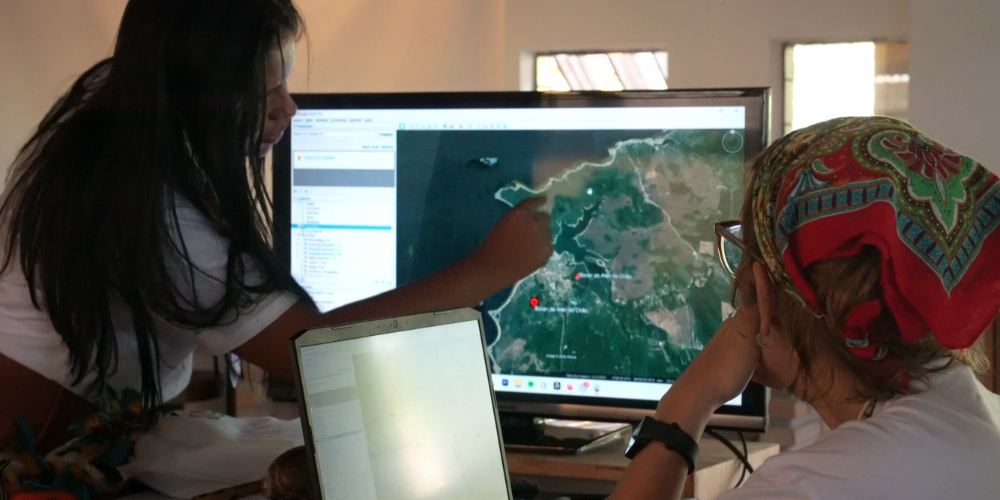 Activity during the REVIDE training
From Secure Documentation to Advocacy
Collecting and sharing community-filmed documentation also creates significant risks to data security and the safety of those involved. REVIDE therefore included training on secure archiving, passwords, backups and risk management, particularly when participants were travelling across their territories.
“All the learnings and teachings that were passed on to us, we will take back to our territories to strengthen our struggle there — a struggle that desperately needs stronger communication within Indigenous territories,” says one of the training participants.
In addition, the training supported participants in identifying strategic audiences and pathways for advocacy. They mapped human rights organizations, media outlets, social media channels and other platforms that could help amplify their work.
“We have observed that, in a context increasingly flooded with AI-generated images, investing in projects that strengthen narratives produced and witnessed by communities experiencing the threats of the climate crisis firsthand can be a powerful tool in addressing the crisis of trust. To expand this capacity, we will continue working to ensure that this evidence increasingly incorporates elements of authenticity, provenance, and verification,” says Natalie Hornos, WITNESS’ Program Manager.
As AI enabled manipulation grows more capable of discrediting authentic accounts, the same technology being used to erase Indigenous testimony is also raising the stakes for what it means to be believed. Indigenous communities cannot be an afterthought in this conversation. They must have a seat at the table and the tools to defend not only their territories, but the truth of what happens to them. In a moment when so much of the world is scrambling to understand how to tell what is real, there is much the rest of us stand to learn from communities who are already showing what it takes to defend truth against power with far fewer resources than most.
To learn more, read the article “Best Practice in Collaboration and Community-led Approaches – Finding Illegal Settlements in Brazil” by Natalie Hornos, published by Opinio Juris.