
Tech and Advocacy

17 Feb Trust in What We See: What the AI Impact Summit Must Get Right on Audiovisual Truth

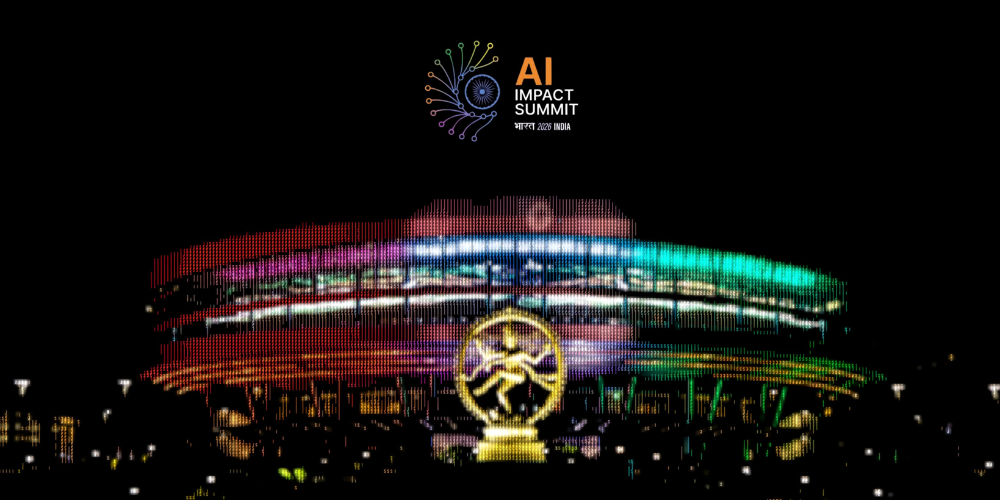
A welcome shift, an incomplete frame Global leaders are convening in New Delhi for the India AI Impact Summit 2026, the first in this series to be hosted by a Global Majority country. WITNESS will be participating as part of civil society.  There is a welcome shift here. Where Bletchley Park and Paris were dominated by catastrophic risk and technical safety, India’s framing pivots towards development impact: AI for the informal economy, frugal AI, democratizing access to compute, and Global Majority agency. These are priorities civil society has long championed. But a development framing without a human rights framework is incomplete. As Amba Kak of the AI Now Institute and Astha Kapoor of the Aapti Institute have argued, low and middle-income countries risk advertising their populations as a path to scale for AI companies without attention to harms or creating guardrails. The summit’s language of “safe and trusted AI” is not a synonym for rights-respecting AI. Rights-based frameworks create legal clarity and predictable obligations; “trust and safety” language leaves compliance open to interpretation. As Adebayo Okeowo, WITNESS’ Associate Director of Programs and Regional Engagement, notes: “A development-first approach to AI is welcome, but development without rights protections has never served

READ MORE

06 Feb Privacy-First Transparency: WITNESS Response to the First Draft EU AI Act Code of Practice

When you interact with a chatbot, view a deepfake video, or encounter AI-generated content online, should you know about it? This question sits at the heart of one of the most consequential policy processes currently underway in Europe. Article 50 of the EU AI Act establishes that people must be made aware when they interact with AI systems, including realistic synthetic media.  The decisions being made now will shape not just user awareness, but the very infrastructure of trust in digital content especially during a period of coordinated disinformation campaigns and what scholars have termed as worst case scenarios of “epistemic collapse or fracture”.  Since November 2025, the European Commission has been convening experts from various stakeholder groups regarding Article 50 of the AI Act’s Code of Practice, specifically the Code of Practice on Transparency. The primary objective of this framework is to develop measures that will facilitate the identification of AI-generated or manipulated content, as well as enhance transparency for users and establish clear guidelines for deployers and developers of AI systems. This Code of Practice will shape how AI tools, from chatbots and generative media to emotion-recognition, biometric categorization and deepfake technologies, inform users when they are interacting

READ MORE

14 Nov WITNESS calls on India to develop an innovative, interoperable and effective AI Transparency regulations

On November 6, WITNESS submitted comments to the Ministry of Electronic and Information Technology (MeitY) in response to the Draft IT Amendment Rules “in relation to synthetically generated information”.  WITNESS welcomes the government’s recognition of the growing impact of AI-generated content. However, we caution that the proposed framework remains too broad and platform-centric to achieve genuine transparency or accountability.  This current amendment provides the potential for over-broad content takedowns that could stifle freedom of expression, arts, satire, and journalism. Drawing on nearly a decade of work at the intersection of AI transparency, detection, provenance, and human rights, WITNESS believes India can lead globally by creating a dedicated, risk-based AI Transparency Framework aligned with international best practices. Effective governance must move beyond simplistic “AI or not-AI” binaries and instead focus on how content is created, disclosed, and used. The goal should be process transparency, not punitive or reactive content moderation. WITNESS Executive Director Sam Gregory notes:  “We cannot regulate AI by only regulating intermediaries; we must build the infrastructure of trust through transparency, provenance and accountability through every stage of the AI pipeline.”  We also echo the perspective of India’s leading digital rights organization, the Internet Freedom Foundation (IFF), which has

READ MORE

13 Nov WITNESS joins open letter urging EU to stop plans that could weaken digital rights protections

This week, WITNESS joined 127 civil society organizations, trade unions, and public interest advocates in signing an open letter urging the European Commission to halt plans that could weaken core digital rights protections in Europe. The proposal, known as the Digital Omnibus or Digital Package on Simplification, seeks to review and “streamline” existing EU digital laws, but could in fact roll back essential safeguards for privacy and accountability online. Among the laws at risk are the General Data Protection Regulation (GDPR), which ensures people have control over their personal data, the ePrivacy framework, which protects online communications from intrusive tracking, and the AI Act, the EU’s first major law to regulate artificial intelligence and prevent harmful or discriminatory uses of the technology. As highlighted in WITNESS’ recent submission to the European Commission, simplification efforts should not come at the expense of human rights. WITNESS stands with partners across Europe in calling on the Commission to strengthen, not dismantle, these hard-won protections, ensuring that technology serves people, not power. The letter’s content is the following:  The EU must uphold hard-won protections for digital human rights  We 127 civil society organisations, trade unions and defenders of the public interest write to emphasise

READ MORE
European Parliament

30 Oct Navigating Human Rights in the EU AI Act: WITNESS’s Call for Thoughtful Transparency

In September, the European Commission began implementing Article 50 of the EU AI Act, the EU’s first comprehensive law regulating artificial intelligence, by launching a public consultation to draft guidelines and a Code of Practice (CoP) on AI transparency. The outcome will shape how AI tools, from chatbots and generative media to emotion-recognition, biometric categorization and deepfake technologies, inform users when they are interacting with or viewing AI-generated content. In its official submission, WITNESS called on the Commission to ensure that the forthcoming Transparency CoP reflects the complex, multimodal nature of generative AI and its impact on accessibility, privacy, and the potential for misuse by governments. For more than two decades, WITNESS has helped communities use video and technology to defend human rights. Over the past eight years, the organization has observed how artificial intelligence can both empower truth and amplify disinformation. WITNESS works to ensure that policies for transparency and disclosure around real and synthetic content are grounded in human rights and respond to the needs of critical frontline information actors like journalists and human rights defenders. Since 2020, WITNESS has also been actively involved in Coalition for Content Provenance and Authenticity (C2PA), shaping authenticity and provenance infrastructure so

READ MORE

Top

Join our fight to fortify the truth and defend human rights.

Take me there

Support Our Work!