Author: WITNESS

27 Feb WITNESS Submits Public Comment to Meta Oversight Board on AI-Generated Sexual Exploitation

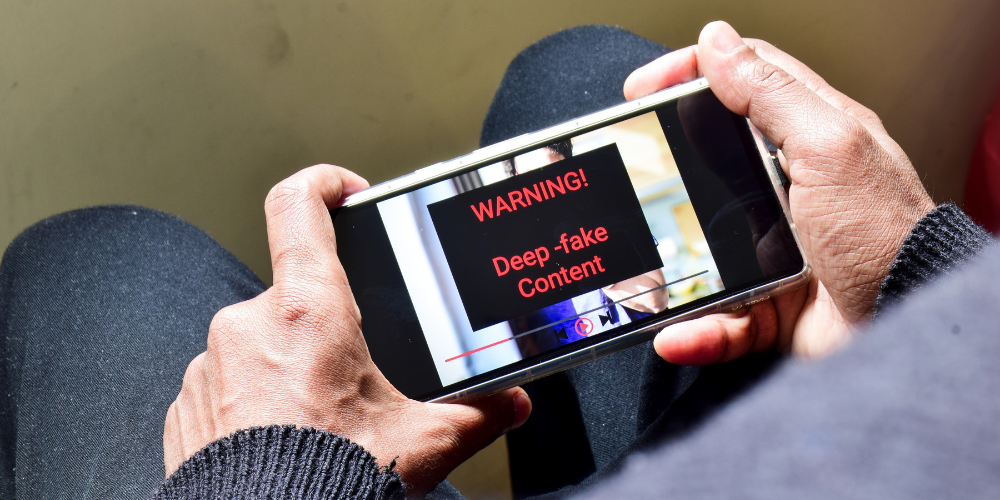
Meta ignored recommendations from its Oversight Board on the last AI non-consensual intimate imagery (NCII) case and continues to fail in addressing the structural issues with technology-facilitated gender-based violence.   WITNESS has submitted a public comment to the Meta Oversight Board on non-consensual AI sexualized impersonation. This case exposes what happens when a platform is told to fix a problem, documents its refusal, and the predicted harm materializes. In 2024, the Oversight Board recommended that Meta overhaul how it handles AI-generated NCII, citing WITNESS twice in its decision following our 2024 submission. The Board told Meta to move its prohibition on sexualized manipulated media into the policy designed for sexual exploitation, to treat AI-generated content as a signal that consent is absent, to update its outdated terminology, and to stop relying on media coverage as a proxy for whether a victim has been harmed. Meta declined the most important of these recommendations and deferred the rest. Its own published response states that it “do[es] not expect to replace ‘derogatory’ with ‘non-consensual’” and “do[es] not expect that this will result in moving the prohibition.” These are not pending changes. They are documented refusals. “This case highlights a structural failure to treat NCII
READ MORE

18 Feb India’s Synthetic Media Rules Build Enforcement on the Wrong Foundation

On 20 February 2026, India’s Information Technology (Intermediary Guidelines and Digital Media Ethics Code) Amendment Rules, 2026 come into force. The rules, notified by the Ministry of Electronics and Information Technology (MeitY) on 10 February, introduce India’s first regulations for synthetic media (referred to as “synthetically generated information” or SGI in the rules). They mandate labelling, provenance metadata, automated verification by platforms, and drastically shorten the time platforms have to remove flagged content. In November 2025, WITNESS submitted comments to MeitY on the draft rules after consulting with local civil society. We drew on nearly a decade of global research and advocacy on synthetic media, content provenance, and human rights. We made five specific recommendations. Some were partially adopted: the rules now apply only to audio and visual content (not all AI outputs), routine AI-assisted tasks like color correction, noise reduction, transcription, and formatting are explicitly excluded, and an impractical requirement to cover 10% of content with a visible label has been removed. These are genuine improvements, and we welcome the government’s responsiveness to civil society input. However, the final rules contain critical gaps that were not addressed, and introduce new provisions that were not part of the public consultation.

READ MORE

17 Feb Trust in What We See: What the AI Impact Summit Must Get Right on Audiovisual Truth

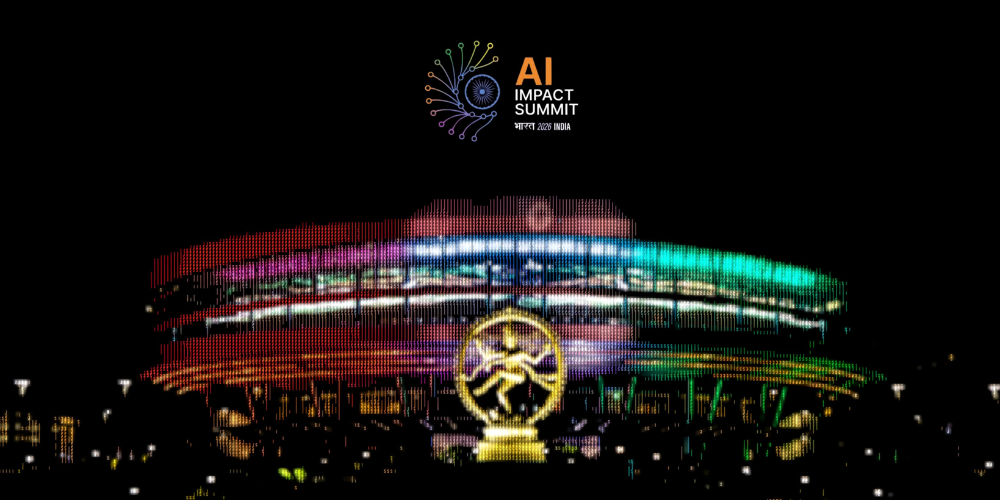
A welcome shift, an incomplete frame Global leaders are convening in New Delhi for the India AI Impact Summit 2026, the first in this series to be hosted by a Global Majority country. WITNESS will be participating as part of civil society.  There is a welcome shift here. Where Bletchley Park and Paris were dominated by catastrophic risk and technical safety, India’s framing pivots towards development impact: AI for the informal economy, frugal AI, democratizing access to compute, and Global Majority agency. These are priorities civil society has long championed. But a development framing without a human rights framework is incomplete. As Amba Kak of the AI Now Institute and Astha Kapoor of the Aapti Institute have argued, low and middle-income countries risk advertising their populations as a path to scale for AI companies without attention to harms or creating guardrails. The summit’s language of “safe and trusted AI” is not a synonym for rights-respecting AI. Rights-based frameworks create legal clarity and predictable obligations; “trust and safety” language leaves compliance open to interpretation. As Adebayo Okeowo, WITNESS’ Associate Director of Programs and Regional Engagement, notes: “A development-first approach to AI is welcome, but development without rights protections has never served

READ MORE

23 Jan Civil society coalition launches campaign calling for Direct-to-Cell satellite connectivity amid Iran’s internet shutdowns

Iran’s government-imposed internet shutdown amid nationwide protests highlights the urgent need for crisis-ready connectivity. With millions cut off from the rest of the world, we’re calling on technology companies and policymakers to urgently prioritize humanitarian internet access for civilians in the deployment of the Direct-to-Cell (D2C) satellite technologies. Humanitarian applications embedded in D2C satellite connectivity regulatory and operational frameworks can offer a lifeline to civilians and help uphold fundamental human rights. The recent protests in Iran have once again demonstrated how internet restrictions are deliberately weaponized by authorities to suppress dissent and isolate populations. This recent blackout is thought to have aided the regime in massacring what is now thought to be at least 16,500 protesters. While some limited connectivity has been partially restored after weeks of near-total blackout, access remains heavily filtered and monitored, with international connectivity severely restricted. Millions of people remain unable to freely communicate with loved ones, access independent information, or safely share evidence of human rights violations. Essential services, including banking, healthcare, emergency response, and telecommunications, continue to face significant disruptions, deepening the humanitarian impact and placing lives at risk.  Experience in Iran has shown that satellite-based connectivity can function even during government-imposed blackouts, but

READ MORE

18 Dec WITNESS Submits Expert Comment to Meta Oversight Board on AI-Generated Video in the Israel–Iran Conflict

On 2 December 2025, WITNESS submitted a public comment to Meta’s Oversight Board in response to a post about an AI-generated video circulating that falsely showed destruction in Haifa during the June 2025 Israel–Iran war. WITNESS urged Meta’s independent Oversight Board, which reviews content decisions on the platform, to go beyond incremental fixes. The organization recommended urgent investment in robust provenance infrastructure, advanced AI detection systems, clear and contextualized labeling, strengthened fact-checking, user controls, likeness protection policies, and a governance framework grounded in human rights and global equity. According to Mahsa Alimardani, Associate Director of Technology, Threats and Opportunities at WITNESS, the case raises urgent questions about how platforms identify, label, and respond to synthetic media in fast-moving conflict or high-risk situations, where misleading visuals can spread more quickly than verification or platform action. “Highly realistic AI-generated content is now shaping public understanding of events before facts can be established. We encourage the Oversight Board to tackle this challenge head on and demand Meta to cultivate sustained investment in transparency infrastructure, detection systems that work in real-world conditions, and platform responses that help users understand how content was created without undermining trust in authentic evidence,” Alimardani said.  The submission also

READ MORE

Top